

noairnogoal

noairnogoal

User
Joined Jan 23, 2026
Last seen 02/16/2026
4
Threads
7
Posts

Hello Dev Team,

I’d like to propose a concrete quest chain that demonstrates how psychological stealth and trace management can work together as a core gameplay system in HackHub.
This concept focuses on behavioral plausibility, log consistency, and long-term consequences, rather than pure technical execution or tool usage.


Core Design Goal

The player is not evaluated by what tools were used, but by whether:

Behavior and technical traces tell the same believable story.

Access alone is never sufficient.
Success depends on acting normal and leaving plausible traces.


Quest Chain: Normal Is the Best Disguise

Difficulty: Medium → High
Target Audience: Mid- to endgame players
Core Mechanic: Behavioral Stealth + Trace Consistency


Quest 1 – Routine Analysis

Objective: Learn without acting

Scenario:
The target system is actively used by legitimate users on a daily basis.

Player focus:

  • observe usage patterns

  • identify time windows

  • understand normal behavior

Restrictions:

  • no data changes

  • no optimization or efficiency

Trace system active:

  • firewall logs source IP

  • application logs passive sessions

Player feedback:

  • “Regular activity detected”

Learning outcome:
Even passive observation creates traces.


Quest 2 – Blend In

Objective: Act psychologically normal

Task:

  • perform a single harmless action

  • during normal business hours

  • with realistic pauses

Trace requirements:

  • IP visibility is acceptable

  • session length must match known profiles

Feedback:

  • “Activity matches known user behavior”

  • “Action slightly more efficient than average”

Learning outcome:
Efficiency can be suspicious.


Quest 3 – The First Deviation

Objective: Introduce a believable mistake

Task:

  • make a minimal change

  • small enough to resemble human error

Trace evaluation:

  • session must close logically

  • timestamps must align with behavior

Feedback:

  • “Change detected without expected behavioral pattern”

Learning outcome:
Every action needs a narrative.


Quest 4 – Trace Conflict

Objective: Adjust traces, do not erase them

Mandatory mechanic:

  • player traces must remain present

  • logs must stay internally consistent

Evaluation logic:

  • deleting logs → obvious gap

  • replacing traces → plausible

  • perfect cleanup → psychologically suspicious

Feedback:

  • “Consistency check in progress”

  • “Behavior–trace mismatch detected”

Learning outcome:
Clean does not mean empty.


Quest 5 – Do Nothing

Objective: Maintain control through inaction

Twist:

  • the player must not intervene

  • the system reacts on its own

Trace system checks:

  • do traces reappear?

  • are sessions properly closed?

Failure condition:

  • intervening again

Learning outcome:
Patience is a gameplay skill.


Endings (Behavior + Trace Based)

Chaos Ending

  • player traces remain visible

  • logs contradict each other

  • investigation escalates

  • networks become “hot”


Clean Frame Ending

  • blame is internally accepted

  • minor inconsistencies remain

  • stable but limited rewards


Perfectly Normal (Best Ending)

  • behavior fully matches known profiles

  • logs are consistent but not perfect

  • maximum rewards unlocked:

    • new networks

    • income sources

    • endgame quest chains

    • reputation title: Clean Operator


Why This Works Well for HackHub

  • turns logs into gameplay elements

  • rewards planning and restraint over speed

  • introduces meaningful psychological stealth

  • scales naturally into endgame content

  • offers high replay value through multiple outcomes


Thank you for taking the time to read this.

Okay, all right, now I've suddenly found an IP address after trying several times.

Hello Team,

I’d like to propose a high-security quest chain that focuses on planning, trace management, and believable manipulation, rather than simple access or tool usage.

The goal is to deepen HackHub’s gameplay by making logs, traces, and consistency central mechanics—especially for mid- to end-game content.


Core Idea

In this quest chain, the player must:

  • Access a high-security system (e.g. security level 3/5),

  • Extract sensitive data,

  • Transfer that data to a secondary system,

  • Make a third party appear responsible for the breach,

  • And remove or redirect their own traces so they are never identified.

Rewards are not just mission completion, but:

  • access to new financial data,

  • new networks,

  • higher-tier money sources,

  • and advanced follow-up quests.

The key point:
Access alone is not enough — what remains in the system matters.


Core New Mechanic: Trace Management

Every interaction automatically creates traces, such as:

  • source IPs,

  • session identifiers,

  • timestamps,

  • routing information.

These traces are:

  • not immediately shown to the player,

  • internally tracked and evaluated by the game,

  • used to determine mission outcomes.

The objective is not to delete everything, but to leave behind plausible, consistent logs.


Defined Log Types (Gameplay-Relevant)

1. Firewall Logs

Layer: Network
Stores:

  • source IP

  • destination IP

  • port

  • time window

Player feedback (indirect):

  • “Unusual connection source detected”

  • “Multiple external sessions registered”

Evaluation:

  • IP still present → small penalty

  • IP deleted → mildly suspicious

  • IP replaced with a plausible source → neutral or positive


2. Router Logs

Layer: Infrastructure
Stores:

  • NAT mappings

  • forwarded connections

  • internal ↔ external paths

  • timestamps

Player feedback:

  • “Routing entry inconsistent”

  • “NAT table rebuilt”

Evaluation:

  • Router logs ignored → major penalty

  • Entries simply deleted → obvious log gap

  • Consistent routing history → bonus


3. Application Logs

Layer: Application / Service
Stores:

  • session IDs

  • client IP

  • actions (read, export, modify)

  • action order and timing

Player feedback:

  • “Session not closed properly”

  • “Client behavior deviates from normal profile”

Evaluation:

  • App logs ignored → almost always a bad ending

  • IP removed but session remains → chaos outcome

  • Fully consistent logs → best outcome possible


Core Design Principle

Clean ≠ empty
Clean = plausible

Logs should not vanish.
They should tell a believable story across all systems.


Player Feedback System (Learnable, Not Explicit)

The game never directly tells the player what is wrong.

Instead, it provides escalating hints:

Yellow (Warning)

  • “External activity detected”

Orange (Problem)

  • “Multiple systems report the same source”

Red (Critical)

  • “Consistency check failed”

This teaches players where traces exist and why they matter—without tutorials or hand-holding.


Reputation System: “Clean Operator”

An internal, invisible score evaluates:

  • correct order of actions,

  • short and efficient access,

  • consistent logs,

  • unnecessary actions or noise.

This score determines:

  • which ending is triggered,

  • which rewards are unlocked,

  • access to future high-tier quests.


Variable Endings

Chaos Outcome

  • Player’s IP still appears

  • Logs contradict each other

  • Investigations escalate

  • Some networks become “hot” or restricted

Clean Frame Outcome

  • Blame is accepted

  • Minor inconsistencies remain

  • Stable but limited rewards

Perfect Transfer Outcome

  • Player’s traces are replaced, not deleted

  • Blame is fully believable

  • Maximum rewards:

    • financial networks

    • passive income sources

    • high-tier quest chains

    • special reputation/title


Why This Fits HackHub Well

  • Rewards thinking over tool spamming

  • Makes order and planning meaningful

  • Turns logs into gameplay elements

  • Adds long-term consequences

  • Works especially well for mid- and end-game content


Possible Extensions

If this system works, it could be expanded with:

  • multi-mission quest arcs (5–8 missions),

  • investigator or monitoring AI reacting to inconsistencies,

  • missions unlocked only by high “Clean Operator” reputation.

Thank you for reading — I believe this would add significant depth and replay value to HackHub.


Hallo zusammen,

ich hoffe, ich bin hier im richtigen Thread.

Ich komme bei dem Auftrag „Benutzerpasswort finden“ nicht weiter.
Weder zu Julie Van-Beek noch zu dem genannten Finanzbüro lassen sich OSINT-Informationen finden. Auch mit der angegebenen LAN-IP ergibt sich aktuell kein sinnvoller Einstiegspunkt.

Bild


Gibt es hier einen vorgesehenen Ablauf oder ist der Job möglicherweise unvollständig bzw. verbuggt?


Hello everyone,

I hope this is the right thread.

I’m currently stuck on the job “Find user password.”
I can’t find any OSINT information about Julie Van-Beek, nor about the mentioned finance office. The provided LAN IP also doesn’t seem to offer any meaningful entry point so far.


Picture   Unfortunately in German :-)

Is there a specific intended workflow for this job, or could it possibly be incomplete or bugged


lg

Hey,
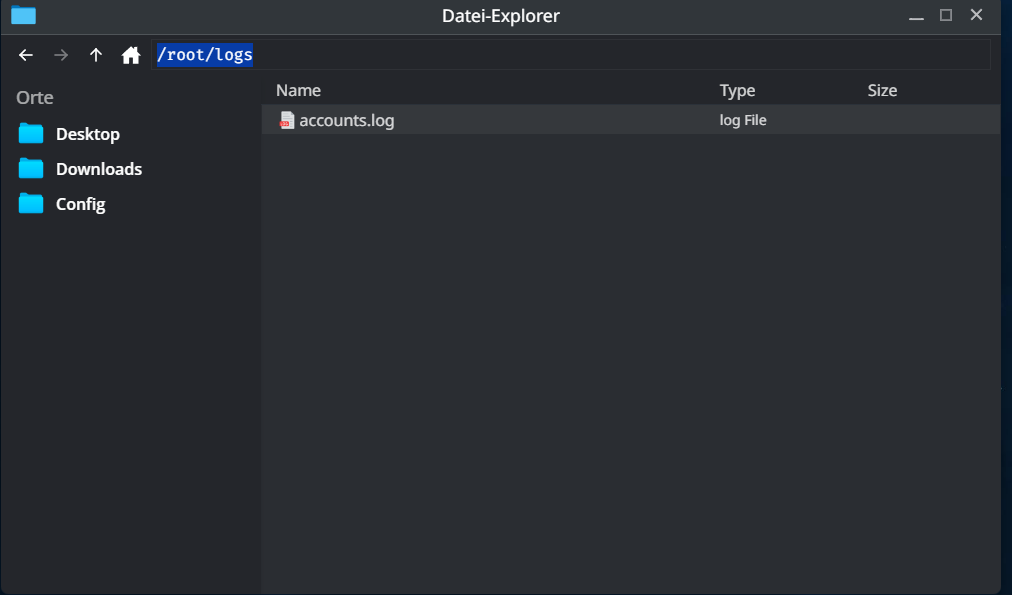
I hope this is what you mean:
In the file explorer, under /root/logs, you can find your login credentials.


lg


All mission steps are marked as completed in the mission checklist. The exam file is downloaded correctly and sent to the NPC via Kisscord. The NPC responds as if the mission was successful, but the mission itself remains active and cannot be completed.

Steps to Reproduce:

  1. Start the mission "Steal Exam Questions"

  2. Complete all listed objectives

  3. Download the exam file

  4. Send the file to the NPC via Kisscord

  5. NPC confirms receiving the file

Expected Result:
The mission should be marked as completed after sending the exam file to the NPC.

Actual Result:
The mission remains active and does not complete.

Pictrue


s it possible to reset the mission?